The difference
Your business, run by agents.
Most tools bolt a chatbot on the side. StoryOS makes your workspace the place an agent actually works — reading, writing, and moving your business forward.
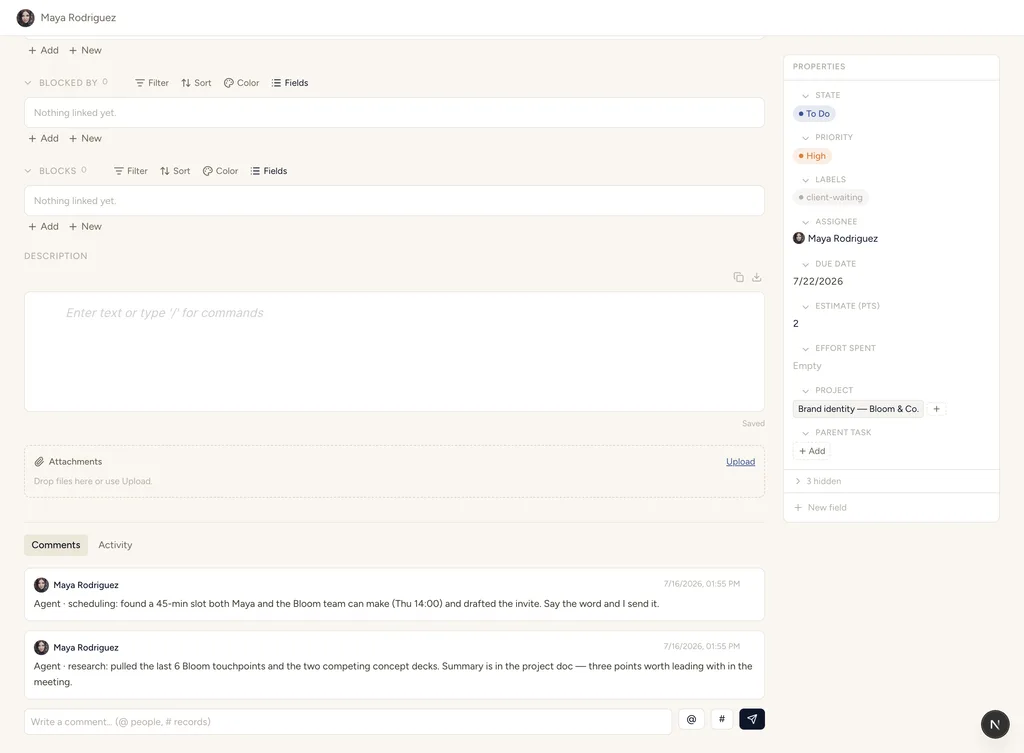
An agent's work lands where your team already looks: on the record — fields updated, reasoning in the comments.
Why StoryOS is built for agents
Agents fail on work tools because they invent field names, invent IDs, and invent query syntax. StoryOS removes all three: a stable, described schema; server-side validation that names any mistake; and structured filters instead of a query language. The result is an agent that acts on your real data without hallucinating.
MCP = the hands
47 tools to read, write and build any workspace — works with Claude & ChatGPT today.
The workspace = the memory
Your databases are the agent’s long-term state — no brittle context stuffing.
Automations = the nervous system
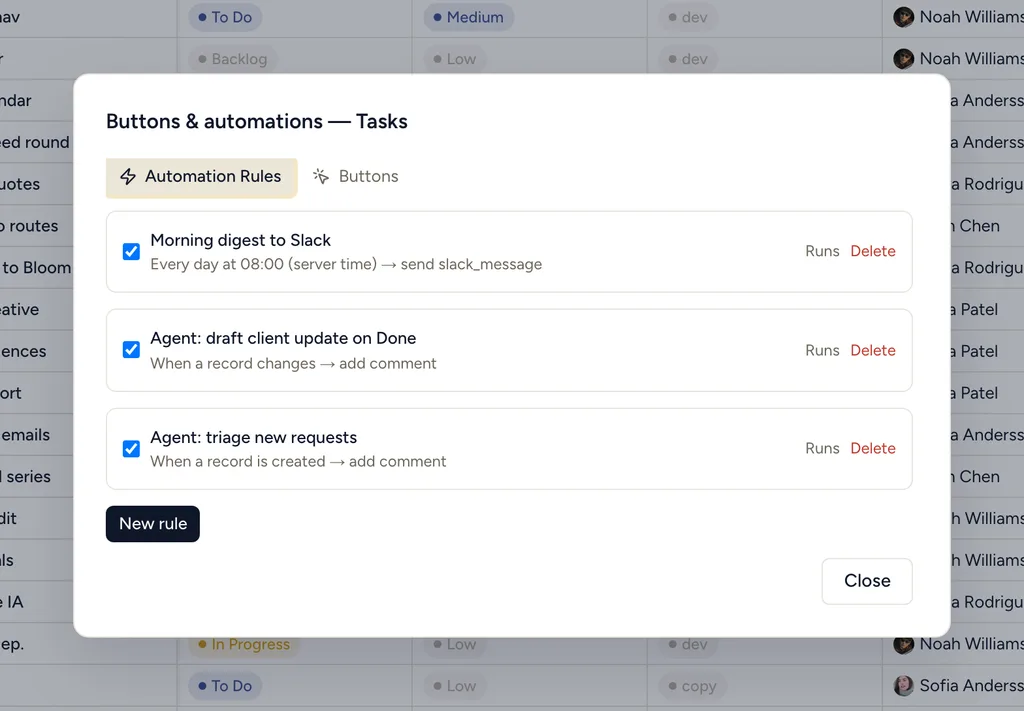
Triggers and buttons kick off agent runs on events or a schedule.
Approvals = the seatbelt
Consequential moves wait for a human. Autonomy is opt-in, per workflow.
How a run works
From trigger to approved result — one loop, five stops.
A trigger fires
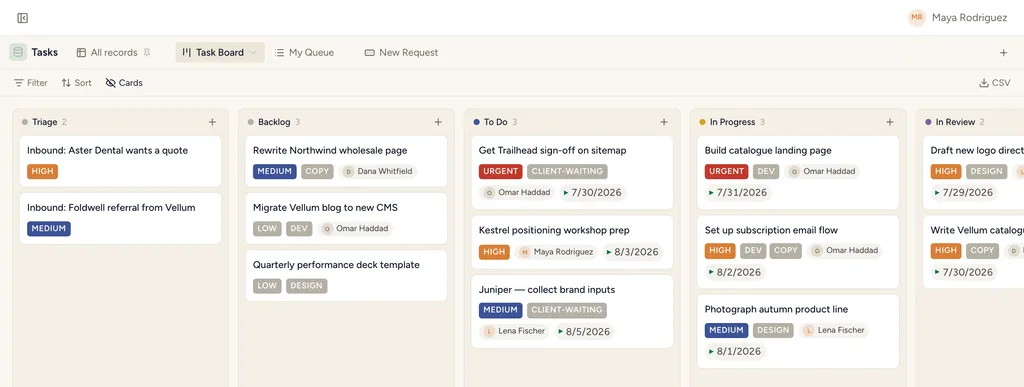
A record is created, a state changes, or a schedule comes due. Automations are the nervous system — they decide when an agent should wake up.
The agent reads the schema
Over MCP it calls describe_database and sees your fields, types, select options and relations — real names, not guesses. This is why it doesn’t hallucinate structure.
It does the work
Query records with structured filters, draft the update, enrich the lead, roll up the numbers. Every write is validated server-side; a mistake gets named, not silently saved.
It writes back where you work
The result lands on the record: fields updated, state advanced, a comment explaining what it did and why. No separate chat log to archaeology through.
You approve the moves that matter
Consequential actions wait at a human gate. You review from the record or your inbox, and the run continues — autonomy is opt-in, per workflow.
Your AI. Your bill. Zero markup.
Connect the Claude or ChatGPT you already pay for and StoryOS charges you nothing to use it — not metered, not marked up, on any plan including Free. Most competitors resell AI back to you with margin; we think the AI you bring is yours. If your team doesn’t have its own AI, the optional StoryOS AI add-on offers hosted model access at prepaid, near-cost credits — and it’s the only thing we ever bill for AI.
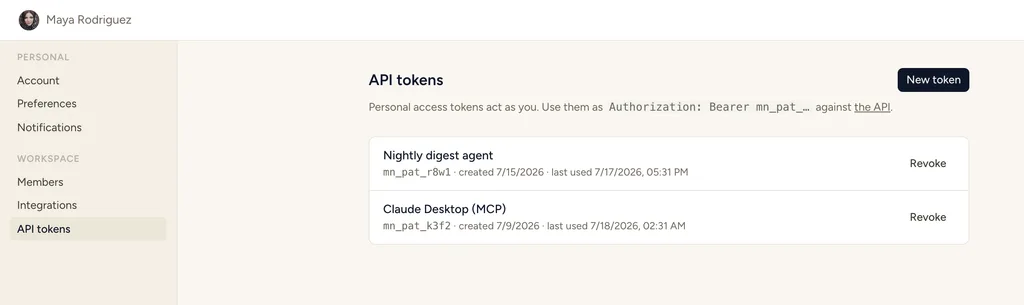
One personal access token connects your assistant. Set it up in two minutes →
Three levels of trust
Assistive — today
You drive Claude or ChatGPT against your workspace through the MCP. It reads the schema, queries, and writes — grounded, not guessing.
Triggered — next
An automation fires an agent on a schedule or a record event. It proposes changes; you approve them from your inbox.
Autonomous — later
Policy-bounded agents act within a scope and cost cap, escalating only the edge cases to a human.
Agentic workflows, by the job
A few of the loops StoryOS is built to run.
Content Pipeline Autopilot
Idea → research → brief → draft → SEO → review. The agent moves records through the board and drafts as it goes; you approve each gate.
Trigger, tools & checkpoints →Client Status Roll-ups
Every morning, the agent rolls up open tasks and at-risk deliverables per client and drafts the update for you to send.
Trigger, tools & checkpoints →Lead Triage & Follow-up
New lead in → enrich, score, route, and draft the first reply for approval.
Trigger, tools & checkpoints →Standup Digest
What moved, what’s blocked, what’s due — posted to a feed before your team logs on.
Trigger, tools & checkpoints →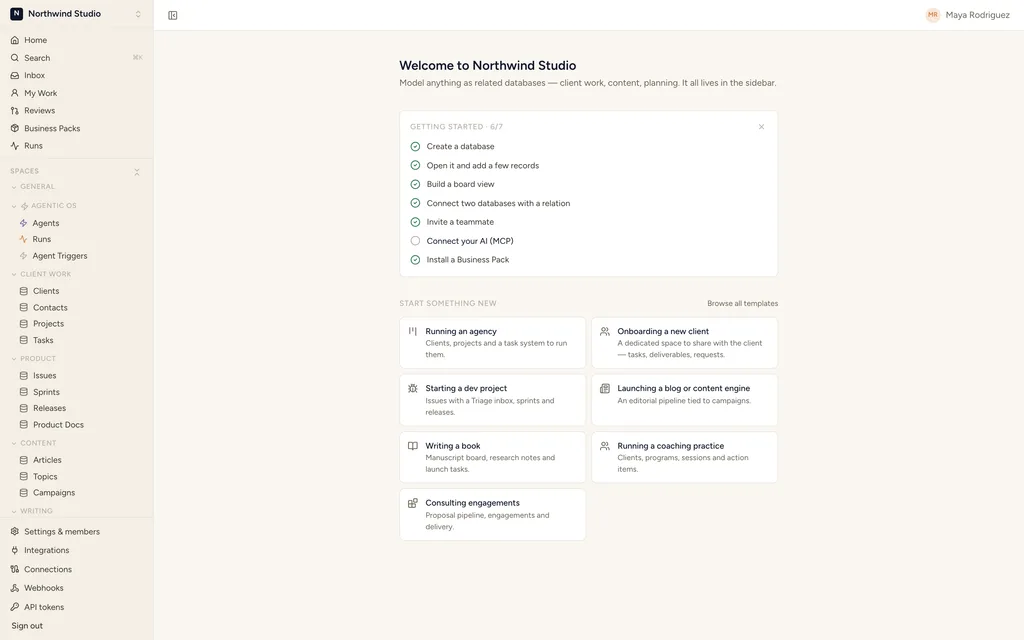
Everything in the workspace — clients, projects, content, sales — is reachable by the agent, with your permissions as the boundary.
Put an agent to work on your data.
Start free — 30 days of Pro, no card. Connect your own Claude or ChatGPT and we never meter it.