For agencies
Every client, project and task — in one connected place.
Stop stitching a CRM, a project tool and five spreadsheets together. Model the whole agency as one linked system, give every client a portal into their work, and let agents handle the status-chasing.
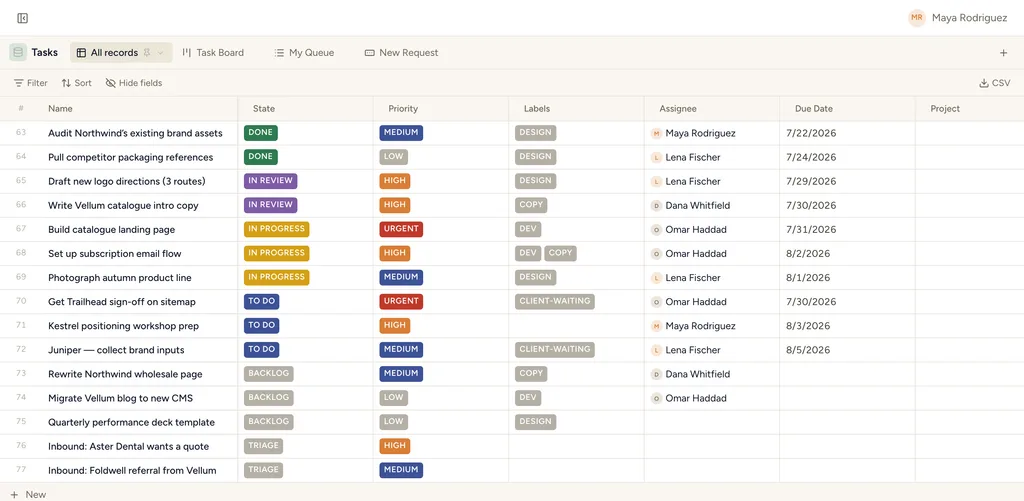
Agency work is relational, but your tools are flat.
- A client lives in the CRM, their project in a PM tool, the deliverables in a doc, the hours in a sheet — and nothing knows about anything else.
- Status updates are a weekly scavenger hunt: you ping owners, chase threads, and rebuild the same picture by hand every Monday.
- Clients have no window into the work, so “quick status?” emails interrupt the team a dozen times a week — and every new request arrives as a thread instead of a ticket.
- Profitability, capacity and what’s at risk are invisible until something has already slipped.
StoryOS models an agency the way it actually works — as connected databases, not disconnected apps.
Databases
The accounts you serve, with contacts and context attached.
Engagements linked to a client, with owner, budget and stage.
The work itself, rolled up to the project and the client.
Relations & roll-ups
True relations mean a task knows its project, and a project knows its client. Roll ups surface open work and at-risk deliverables per account without a single spreadsheet formula.
Views that fit the work
Move projects through stages — pitch, active, review, delivered.
See every engagement on a time axis and spot the crunch weeks.
The master list — filter by client, owner, or what’s overdue.
From “can you send an update?” to a portal they check themselves.
Intake, delivery and approval run through the same connected records — no client seats to buy, no second tool to sync.
Turn intake into a form, not an email thread
Build the request form on the database where the work already lives: pick the fields, mark what’s required, write the copy. One click mints a share link — or embed the form on your own site with an iframe.
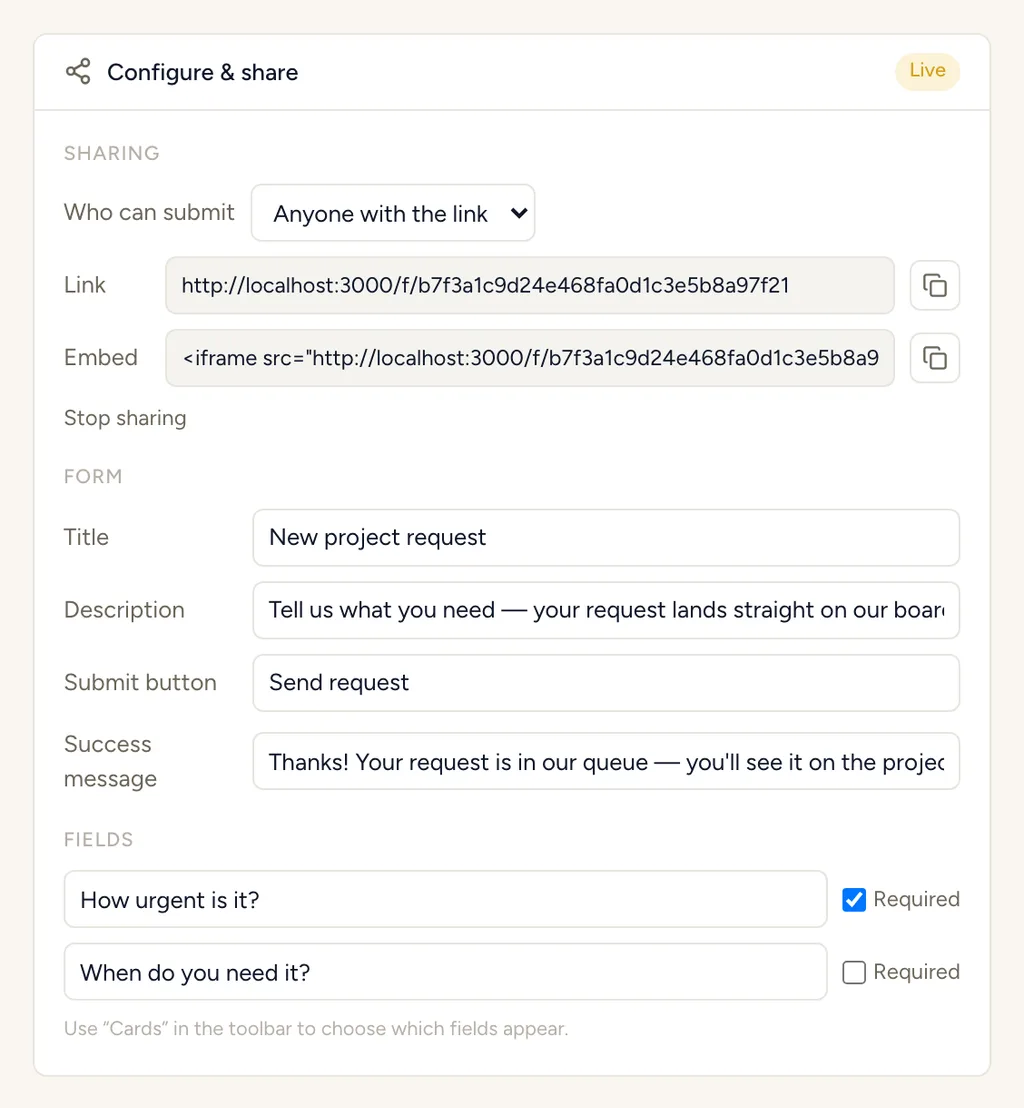
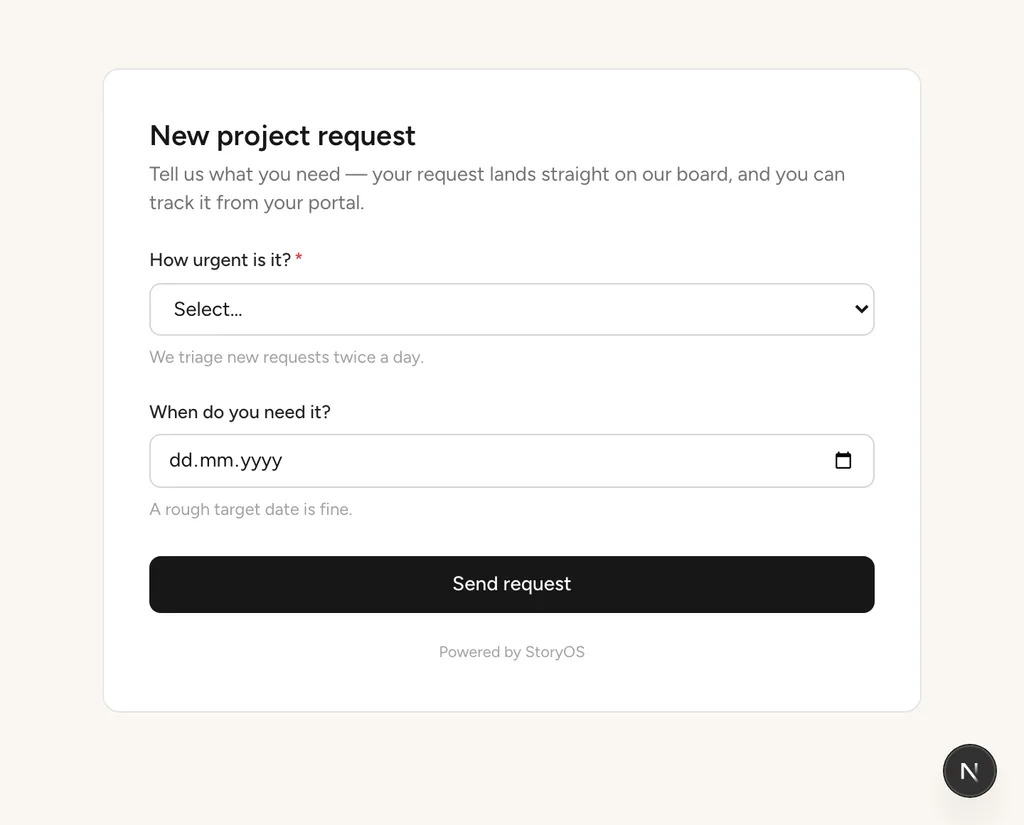
Clients submit — no account, no login
The form lives at its own clean URL. A submission lands as a real record with priority and due date already set, on the same board your team triages every morning — not in someone’s inbox.
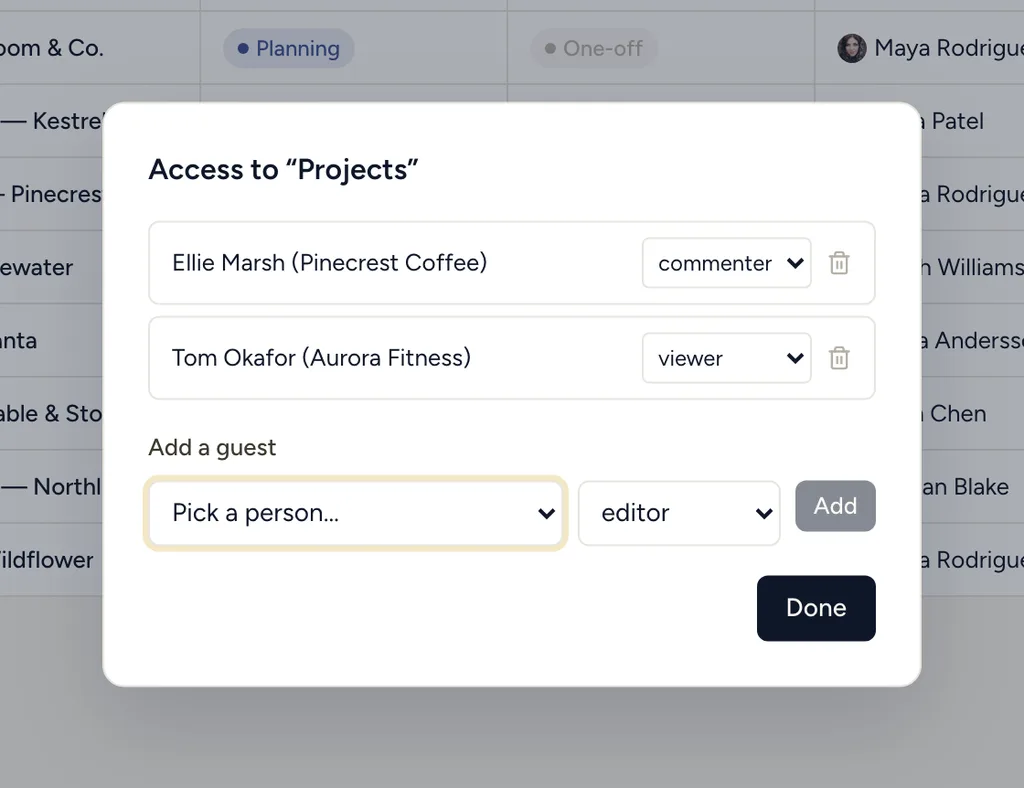
Give each client a scoped window into the work
Invite a client contact as a guest and grant exactly one space or database — nothing else exists for them. Five access levels, from read-only viewer to creator. Viewers are free on every plan, so a portal never costs you a seat.
Approvals happen on the record
A commenter-role client discusses the deliverable right where it lives — comments, mentions and history in one thread. Your agent drafts the status update from live records; you hit send.
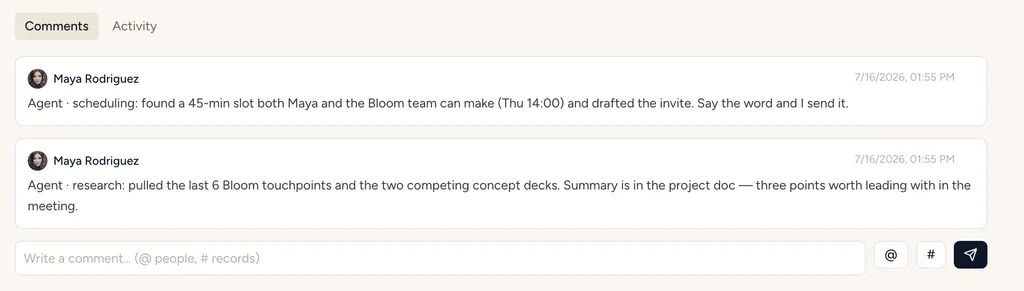
Then point an agent at it, and the busywork runs itself.
Because the structure is a described schema, Claude or ChatGPT can work it through the MCP server — grounded in your real records, validated on every write. A few of the loops it runs:
Run agencies on StoryOS.
Install the “Client Projects & Tasks” template and you're editing a working system in minutes. Free, open source, and yours.