For marketing teams
Run the whole content engine as one pipeline.
Ideas, briefs, drafts, calendar and campaigns — connected, visible, and moving. With an agent drafting at every gate while you approve.
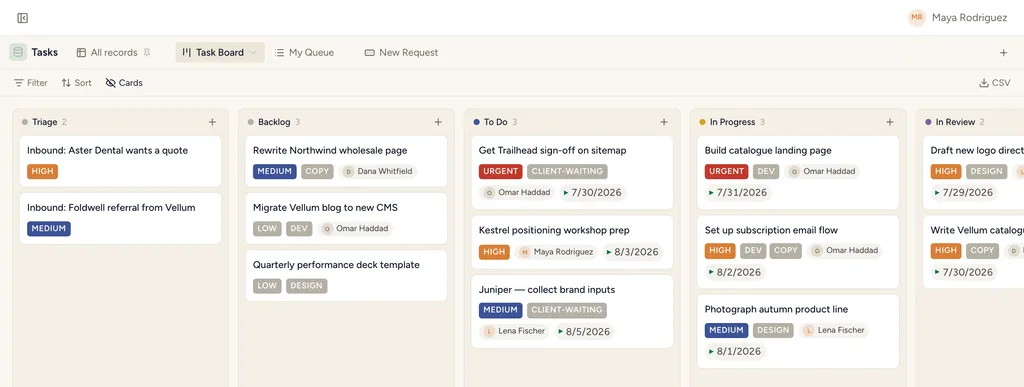
Content lives in a dozen places and none of them talk.
- Ideas in one doc, the calendar in another tool, drafts in Google Docs, campaign plans in a deck — and no line connecting the idea to the thing that shipped.
- You can’t see what’s in flight, what’s stuck, or what a campaign actually produced without asking three people.
- Every hand-off — idea to brief, brief to draft, draft to review — is a copy-paste and a lost thread.
StoryOS turns the content engine into one connected pipeline, from raw idea to published piece.
Databases
Captured, rated and promoted — nothing good gets lost.
The pieces themselves, moving through editorial stages.
Group work into campaigns and topic clusters, target vs actual.
Relations & roll-ups
Each article links to its idea, its topic cluster and its campaign. Roll ups show how many pieces a campaign has in flight and how many have shipped — live, not reconstructed.
Views that fit the work
The editorial pipeline: idea, brief, draft, review, scheduled.
Plan posts around real calendar moments, across platforms.
A visual grid of pieces — great for social and creative review.
From a doc full of dead ideas to a board that tells you what ships this week.
Ideas, briefs, drafts and the publish date live on the same records — so "what’s actually moving?" is a glance, not a status meeting.
Rate ideas before anyone writes
Every idea is a record with a keyword, an angle and a rating. The weak ones stay visible instead of vanishing into a doc, and the strong ones get promoted with a stage change — no re-typing into a second tool.
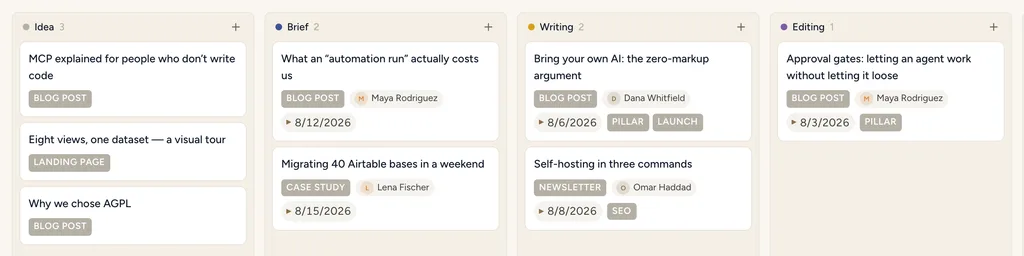
The brief lives on the record, not in a doc
Angle, audience, must-cover points and the proof to include are rich text on the article itself — next to the keyword, the author and the date. The writer opens one thing.
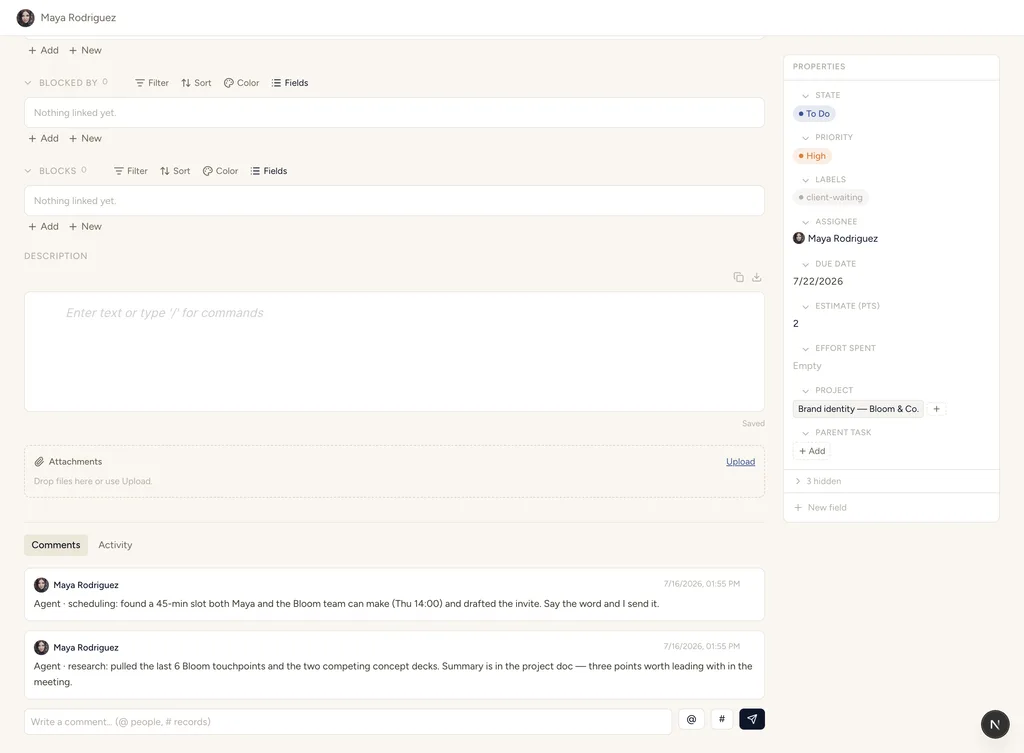
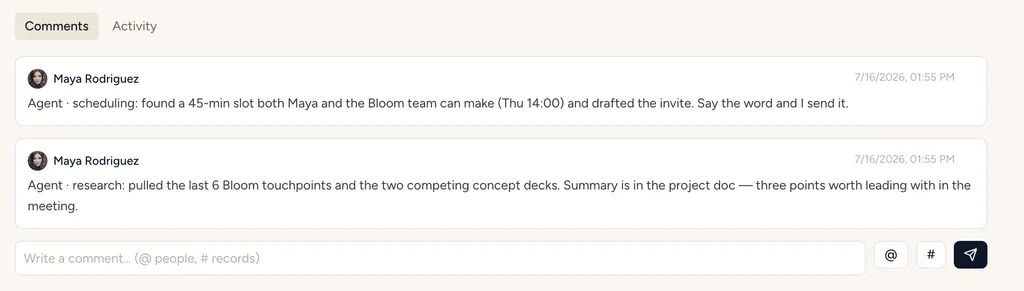
Approval is a gate, not a chase
An agent can draft the outline or the SEO pass, but the stage only moves when a human moves it. The proposal waits on the record with the reasoning attached, so reviewing is reading — not reconstructing.
The calendar is the same records
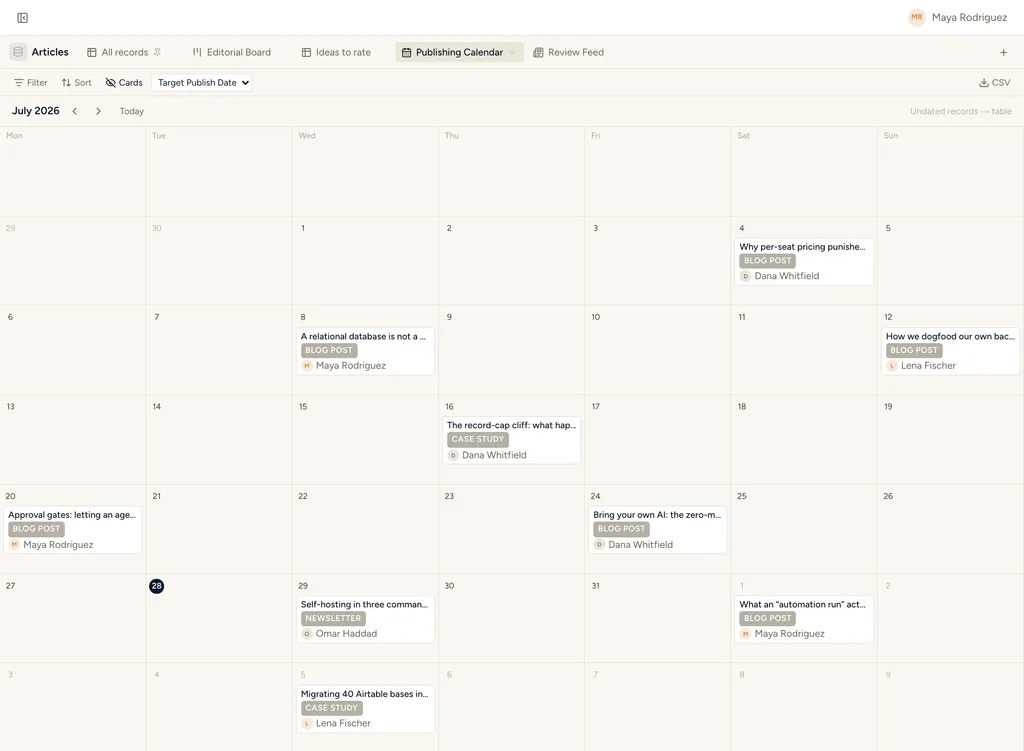
Set a target date and the article appears on the publishing calendar. Nothing is copied anywhere: the board, the calendar and the feed are three lenses on one dataset.
And the agent does the moving, drafting and chasing.
Because the structure is a described schema, Claude or ChatGPT can work it through the MCP server — grounded in your real records, validated on every write. A few of the loops it runs:
Run marketing teams on StoryOS.
Install the “Content Pipeline” template and you're editing a working system in minutes. Free, open source, and yours.